Conflict is rising. Join the movement to create a peaceful future. Sign the Pledge

Conflict is rising. Join the movement to create a peaceful future. Sign the Pledge
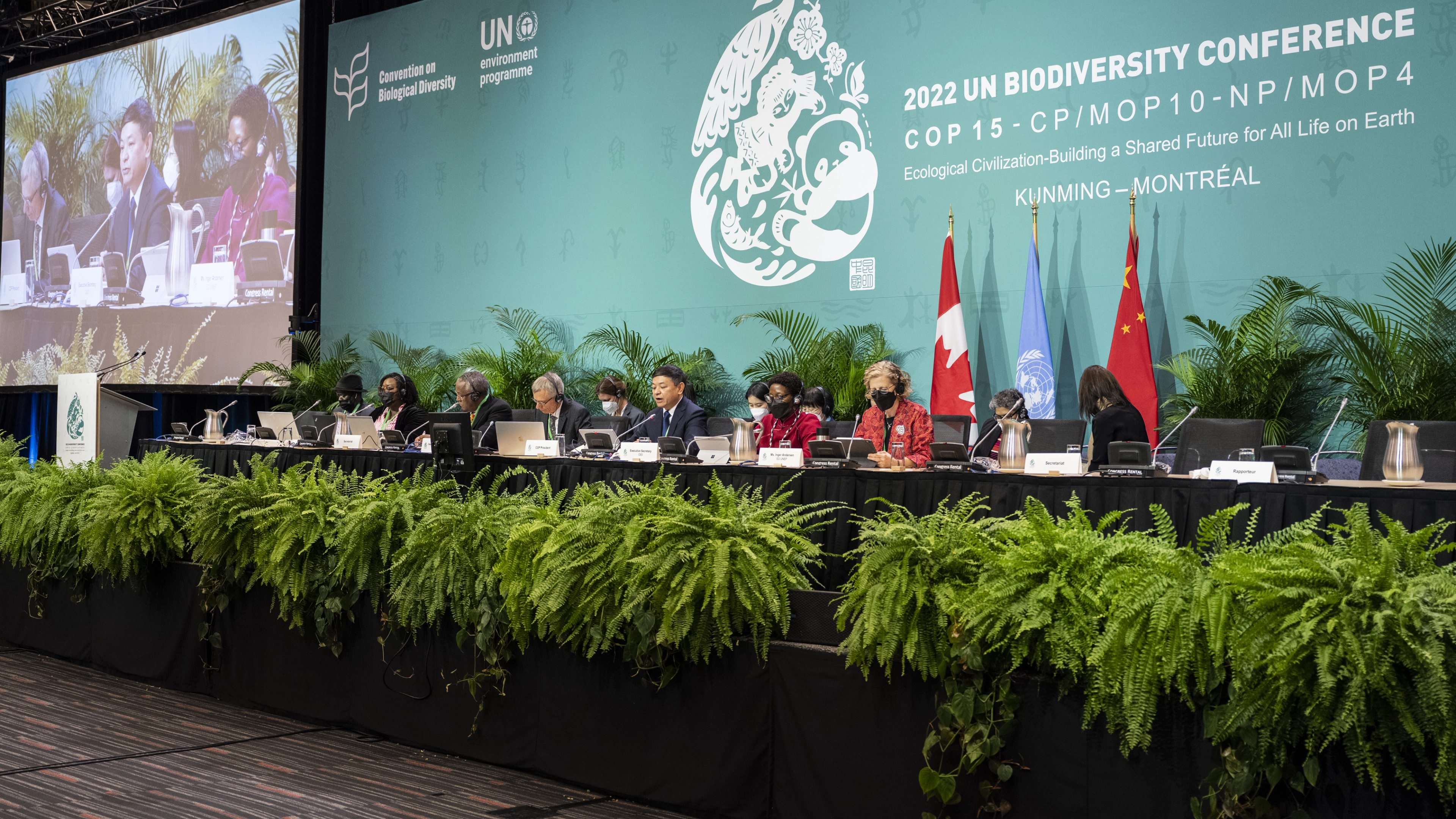

In 2022, governments adopted the Kunming-Montreal Global Biodiversity Framework (GBF) under the Convention on Biological Diversity, setting a 2030 mission to halt and reverse biodiversity loss. Central to the agreement was a bold commitment: mobilize $200 billion per year by 2030 for biodiversity conservation and sustainable use.
For two years, questions lingered over how to turn that pledge into operational finance. In February 2025, after a deadlock at an initial summit in Cali, Colombia, countries reconvened in Rome and finalized a concrete biodiversity finance roadmap, marking a critical turning point for implementation.
Nature loss is accelerating. The Intergovernmental Science-Policy Platform on Biodiversity and Ecosystem Services (IPBES) estimates that up to one million species face extinction risk, many within decades. Ecosystem degradation threatens food security, water systems, health, and climate resilience.
Financially, the gap is stark. Global assessments estimate a biodiversity funding gap of roughly $700 billion per year. The Rome roadmap seeks to close this gap through two levers: mobilizing new finance and reforming harmful subsidies.
The $200 billion annual mobilization target combines public budgets, private capital, and multilateral development bank resources. Complementing it is a pledge to identify and phase out or redirect $500 billion per year in subsidies harmful to biodiversity by 2030, including certain industrial fishing and agricultural supports.
Together, these measures approach the scale required to realign global economic systems with ecological stability.
1) Public and Private Mobilization
The $200 billion target includes domestic spending, international public finance, private investment, and multilateral development finance. This reflects a structural shift: biodiversity is not solely an environmental line item. It is economic infrastructure.
More than half of global GDP is moderately or highly dependent on nature, according to global risk analyses. Agriculture, fisheries, pharmaceuticals, tourism, and manufacturing all rely on functioning ecosystems. Financing biodiversity is therefore risk management.
2) International Flows to Developing Nations
Under the roadmap, developed countries committed to provide $20 billion annually by 2025, rising to $30 billion per year by 2030, to support conservation in developing countries.
Many biodiversity hotspots lie in the Global South, where fiscal capacity can be constrained. Predictable international flows are essential to protect tropical forests, coral reefs, and mangroves that stabilize the global climate.
Equitable finance is a cornerstone of implementation credibility.
3) Reforming Harmful Subsidies
The agreement to reform or redirect $500 billion annually in biodiversity-harmful subsidies may be the most transformative element.
Subsidies that incentivize overfishing, habitat conversion, or unsustainable agricultural inputs can accelerate ecosystem loss. Redirecting these flows toward regenerative practices aligns markets with conservation outcomes.
Subsidy reform is politically complex, but it may have greater long-term impact than new funding alone.
To ensure funds reach implementation on the ground, several tools have been activated.
The Cali Fund
Officially launched in 2025, the Cali Fund collects voluntary contributions from industries that benefit from Digital Sequence Information (DSI) derived from genetic resources. Sectors such as pharmaceuticals and cosmetics rely on biodiversity-linked data.
Crucially, at least 50 percent of proceeds are earmarked for Indigenous Peoples and local communities, recognizing their central role in biodiversity stewardship.
The mechanism operationalizes benefit-sharing in the digital era.
Global Biodiversity Framework Fund (GBFF)
Established under the Global Environment Facility (GEF), the GBFF has approved tens of millions of dollars in grants for project preparation across dozens of countries, prioritizing Small Island Developing States (SIDS) and Least Developed Countries (LDCs).
By focusing on capacity-building and early-stage preparation, the fund strengthens the pipeline for larger-scale conservation projects.
BIOFIN Initiative
Managed by the United Nations Development Programme, the BIOFIN initiative supports more than 90 countries in developing National Biodiversity Finance Plans.
Biodiversity finance cannot be one-size-fits-all. Countries must tailor fiscal tools, tax policies, and investment incentives to local economic structures. BIOFIN bridges global commitments with domestic policy.
The initial summit in Cali stalled over financing clarity. The resumed session in Rome delivered operational detail.
Environmental agreements often falter between pledge and practice. By defining financing pathways, reporting expectations, and subsidy reform timelines, the Rome roadmap strengthened implementation credibility.
It also reinforced multilateral cooperation at a time when geopolitical fragmentation is rising.
As of February 2026, parties to the Convention on Biological Diversity must submit national progress reports outlining steps toward financing and conservation targets.
These reports will inform the first major Global Review of Implementation at COP17 in Armenia in October 2026.
The review will assess:
The credibility of the Kunming-Montreal Global Biodiversity Framework depends on measurable outcomes.
Ecosystem degradation amplifies instability. Deforestation can alter rainfall patterns and agricultural yields. Coral reef collapse undermines coastal economies. Water scarcity heightens competition.
Biodiversity loss intersects with food security, migration, and economic volatility. Financing conservation is therefore linked to long-term stability.
Mangrove restoration reduces storm damage. Sustainable fisheries protect livelihoods. Forest conservation strengthens climate resilience.
Environmental finance is not isolated from global peace.
The Rome agreement shows that multilateral environmental cooperation remains possible. But sustained progress requires public awareness.
Biodiversity finance rarely dominates headlines, yet it underpins climate resilience, food systems, and economic stability.
Conversations about nature finance belong in boardrooms, universities, community forums, and policy debates. Civic engagement strengthens accountability.
If you believe biodiversity protection is foundational to economic stability, climate resilience, and long-term peace, support initiatives that promote responsible governance and international cooperation.
Engage in discussion. Raise awareness. Encourage similar frameworks that align finance with sustainability.
Support people-centered campaigns for global stability at: https://pledge4peace.org/campaigns
Environmental protection is not a peripheral issue. It is structural.
The $200 billion biodiversity commitment is not just about conservation, it is about safeguarding the systems that sustain life and stability.

The history of LGBTQ+ rights is a complex narrative of resilience, spanning eras of severe persecution to a modern global movement for equality. While major legal victories like same-sex marriage have transformed societies, 65 nations still criminalize LGBTQ+ identities today. Uncover the pivotal timeline of human rights progress and learn how you can actively support the organizations fighting on the frontlines for global liberation.
Pledge4Peace.org
June 25, 2026

Peace between India and Pakistan won't come from leaders alone—it begins with youth, citizens, and communities choosing empathy, dialogue, and shared humanity.
Pledge4Peace.org
June 7, 2025

True peace begins within. This article explores how inner calm and mental resilience empower activists to lead sustainable change in a chaotic world.
Pledge4Peace.org
May 31, 2025